


Introduction
Diabetes is a chronic condition affecting millions of people worldwide, characterized by the body’s inability to regulate blood sugar levels effectively. Diabetes management is complex, involving regular monitoring of blood glucose levels, medication adherence, dietary adjustments, and physical activity. For patients with type 1 diabetes, insulin administration is crucial, while those with type 2 diabetes often require a combination of oral medications and lifestyle modifications
With the advent of Artificial Intelligence (AI), the landscape of diabetes management is undergoing a revolutionary transformation offering new tools to enhance patient care and reduce complications. From predictive analytics to automated insulin delivery, AI is enhancing diagnostics, treatment personalization, and patient outcomes. This blog explores how AI is reshaping diabetes care, its current applications, challenges, and future potential.
1. AI in Diabetes Diagnosis and Risk Prediction
- Early Detection and Risk Assessment
AI-powered algorithms analyze vast datasets—including genetic information, lifestyle factors, and electronic health records (EHRs)—to predict diabetes risk long before symptoms appear. Machine learning models can identify patterns that humans might miss, enabling early intervention.
Predictive Modeling: Tools like IBM Watson and Google’s DeepMind analyze historical patient data to forecast diabetes onset with high accuracy.
Retinal Scans for Diabetic Retinopathy: AI systems (e.g., IDxDR) detect early signs of diabetic eye disease from retinal images, allowing timely treatment.
- Automated Diagnostics
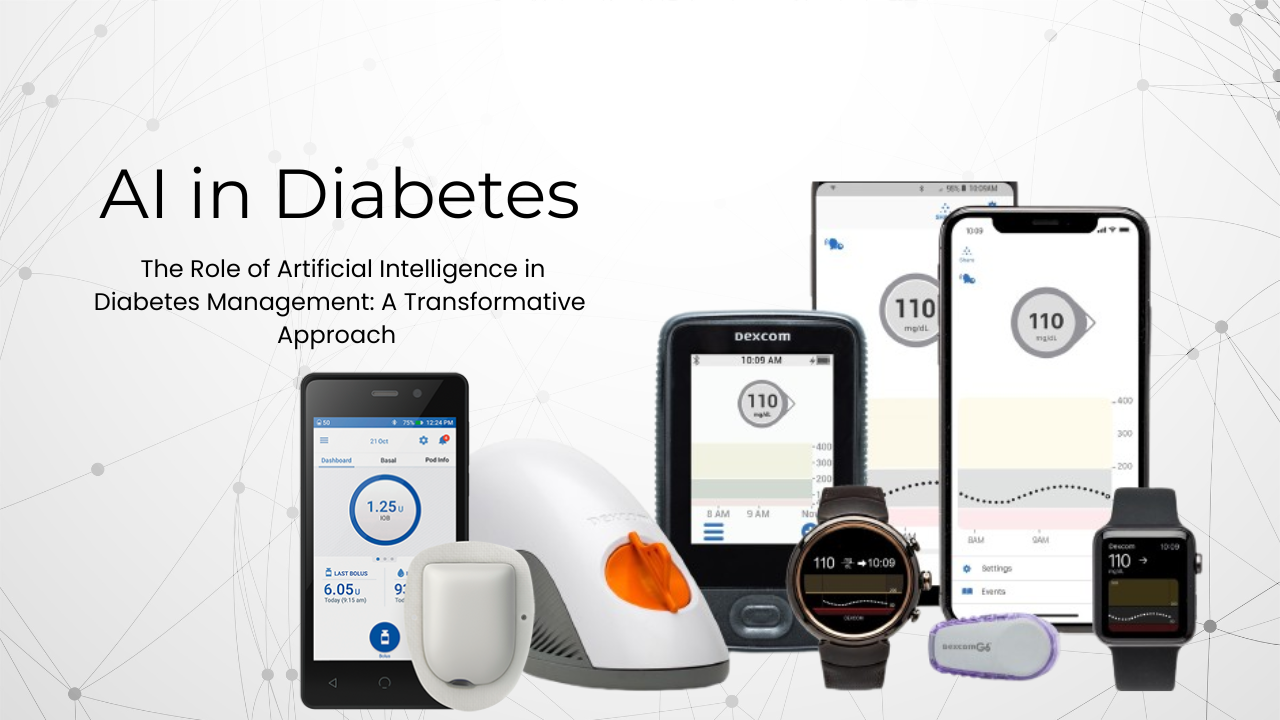
AI enhances diagnostic accuracy by interpreting lab results, glucose trends, and even voice patterns (research shows vocal changes may correlate with blood sugar fluctuations). Companies like Dexcom and Abbott integrate AI with continuous glucose monitors (CGMs) to provide realtime insights.
2. AI in Personalized Diabetes Management
- Continuous Glucose Monitoring and AI
One of the most significant advancements in diabetes management is the development of Continuous Glucose Monitoring (CGM) systems. These devices provide real-time data on glucose levels, allowing patients to monitor their condition more closely and adjust their treatment accordingly. AI is enhancing the capabilities of CGM systems, making them more accurate and user-friendly. AI algorithms can analyze CGM data to predict glucose trends, alerting patients to potential hypoglycemia (low blood sugar) or hyperglycemia (high blood sugar) before they occur. This predictive capability enables patients to take preventive actions, such as adjusting insulin doses or consuming carbohydrates, to maintain stable glucose levels. Moreover, AI can personalize glucose management by learning from individual patient data, optimizing treatment plans based on daily patterns and responses to therapy. In addition to improving patient outcomes, AI-powered CGM systems reduce the cognitive burden of diabetes management. Instead of manually interpreting glucose data and making decisions, patients can rely on AI-driven insights and recommendations. This ease of use is particularly beneficial for children, elderly patients, and those with cognitive impairments.
- Smart Insulin Delivery Systems
One of the most groundbreaking AI applications is the Artificial Pancreas—a closed-loop system combining CGMs and insulin pumps. AI algorithms adjust insulin delivery in real time based on glucose levels, reducing hypoglycemia risks.
Example: The Medtronic Mini Med 780G uses AI to autocorrect insulin doses, mimicking a healthy pancreas.
- Personalized Nutrition and Lifestyle Recommendations
AI-powered apps like Nutrino and Virta Health analyze dietary habits, activity levels, and glucose responses to suggest customized meal plans. Chatbots and virtual coaches (e.g., Livongo) provide real time advice, improving adherence to treatment.
- AI in Wearable Technology
Wearables like Fitbit, WHOOP, Oura ring, and Apple Watch integrate AI to track physical activity, sleep, and heart rate. In future, advanced models can even predict blood sugar spikes based on exercise and stress levels.
3. AI for Preventing Complications and Remote Monitoring
- Remote Patient Monitoring

AI enables telemedicine by analyzing data from CGMs, smart insulin pens, and EHRs. Doctors receive alerts for abnormal glucose levels, allowing timely interventions.
Example: BlueStar (by Welldoc) is an AIdriven app that provides personalized coaching and alerts clinicians about critical trends.
- Preventing Long Term Complications
Diabetes increases risks of heart disease, neuropathy, and kidney failure. AI helps by:
- Predicting complications using deep learning on EHRs.
- Enhancing foot ulcer detection via AI imaging (e.g., Podimetrics).
- Optimizing medication regimens to reduce side effects.
- Challenges and Ethical Considerations: Despite its promise, AI in diabetes faces hurdles:
1. Data Privacy: AI relies on sensitive health data; breaches could have severe consequences.
2. Bias in Algorithms: If trained on nondiverse datasets, AI may underperform for certain ethnic groups.
3. Regulatory Hurdles: FDA approval for AI-driven devices is stringent, slowing deployment.
4. Patient Trust: Some individuals may resist AI-driven decisions, preferring human oversight.
- The Future of AI in Diabetes Care :
The next decade will see exponential growth in AI applications:
- AI – powered nanobots for real time glucose regulation.
- Voice based glucose monitoring (e.g., Amazon Alexa integrations).
- Genomic AI models predict individual drug responses and can help in precision treatment.
Collaborations between tech giants (Google, Apple) and biotech firms (Novo Nordisk, Eli Lilly) will accelerate innovation.
- Conclusion
AI is revolutionizing diabetes care—making it more precise, proactive, and personalized. While challenges remain, the potential to improve millions of lives is undeniable. As AI evolves, we move closer to a future where diabetes is not just managed but prevented entirely. For patients and healthcare providers, embracing AI means better outcomes, fewer complications, and a higher quality of life. The journey has just begun, and the possibilities are limitless.