


Everyone is talking about protein—but are we forgetting fibre?
Protein shakes. Protein bars. High-protein breakfasts. Protein has become one of the biggest conversations in nutrition—and for good reason.
But good nutrition is rarely about one nutrient. Fibre deserves a place in the conversation too.
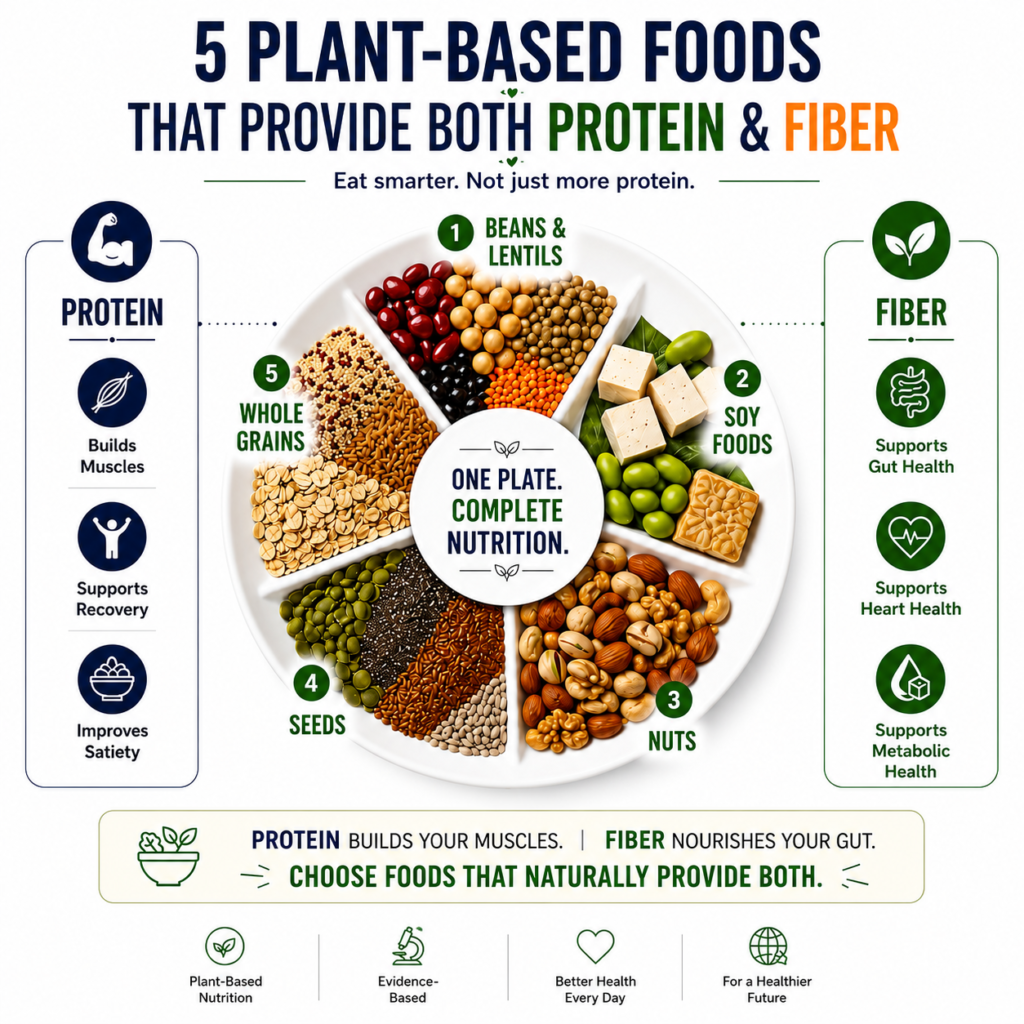
Fiber supports digestive and gut health, helps with regularity and can slow the rise in blood glucose after a meal. Higher-fiber dietary patterns are also associated with better cardiometabolic health.
So, instead of asking only, “Where is my protein coming from?”, I often think there is another useful question:
“Can I get some fiber with it too?”
Fortunately, many everyday plant foods give us both.
1. Beans & Lentils: An Excellent Place to Start
If I had to choose one category that beautifully combines plant-based protein and fiber, beans and lentils would be near the top of the list.
Lentils, chickpeas, kidney beans and black beans provide protein, fiber, complex carbohydrates and several important micronutrients. For perspective, one cup of cooked lentils provides about 18 g of protein and 15 g of fiber, although values naturally vary by food and serving size.
And they are incredibly easy to use.
Add lentils to soup, toss chickpeas into a salad or include beans in a grain bowl. Indian dals are another simple and delicious way to make pulses part of everyday eating.
2. Soy Foods: More Than Just Tofu
Soy is one of the most useful sources of high-quality plant protein.
Whole and minimally processed soy foods such as edamame, tofu and tempeh can contribute protein along with varying amounts of fiber and other nutrients. Harvard nutrition experts recently highlighted soy foods among the useful options for getting protein and fiber from plant foods.
You don’t need an elaborate recipe. Add tofu to a vegetable stir-fry or edamame to a salad or grain bowl, or swap tempeh for meat occasionally.
Simple.
3. Nuts: Small Food, Useful Nutrition
Almonds, pistachios, peanuts and walnuts bring something interesting to the table: protein, fiber and predominantly unsaturated fats in the same food.
For example, an ounce of unsalted roasted almonds provides roughly 6 g of protein and 3 g of fiber.
A small handful makes an easy snack. You can also add nuts to yoghurt, oats or salads.
Because nuts are energy-dense, think of them as an addition to a balanced meal or snack rather than something to eat without considering portions.
4. Seeds: Easy to Add, Easy to Forget
Chia, flax, pumpkin and sunflower seeds may occupy very little space on the plate, but they can add fiber, plant protein, healthy fats and micronutrients.
And perhaps their greatest advantage is convenience.
Sprinkle chia or ground flax over yoghurt or oats. Add pumpkin seeds to a salad. Mix seeds into homemade breakfast bowls.
You don’t necessarily need to redesign your diet. Sometimes adding one useful ingredient to a meal you already enjoy is enough.
5. Whole Grains: Choose the Whole Version
Oats, quinoa, barley, buckwheat, brown or red rice, and whole wheat provide fiber, along with some plant protein, minerals, and other nutrients.
The key word here is whole.
Unlike refined grains, whole grains retain the bran, germ and endosperm. This means they preserve more of their natural fiber and nutrient package.
Try oats at breakfast, quinoa or barley in salads, or replace some refined grains with intact whole grains.
Healthy eating doesn’t always require eating less. Sometimes it means choosing a better version of what you already eat.
You Don’t Have to Go Vegetarian
This is an important point. Eating more plant-based protein does not mean that everyone needs to give up eggs, dairy, chicken, or fish.
For many people, a more realistic goal is simply to make the existing plate more plant-rich.
Think:
- Chicken + lentil salad
- Eggs + whole-grain toast
- Greek yoghurt + chia seeds + nuts
- Tofu + vegetables + quinoa
This approach also reminds us that the nutritional value of a protein food is about more than its protein number. Foods come as a “package”—with fiber, fats, vitamins, minerals and other components that matter too.
The Simple Takeaway
We don’t need to turn every meal into a mathematical exercise.
But the next time you plan breakfast, lunch or dinner, ask yourself two simple questions:
Where is my protein? And where is my fiber?
Beans and lentils. Soy foods. Nuts. Seeds. Whole grains.
These are simple, familiar foods that can help us get more of both.
And perhaps that is the nutrition message worth remembering:
Don’t just count your protein. Count your fiber too.
Your muscles need nourishment. Your gut does too.
Which of these five foods is already part of your regular diet?
Medical Disclaimer: This article is for general educational and informational purposes only and is not a substitute for personalised medical or nutritional advice. Individual nutritional needs may vary. People with kidney disease, gastrointestinal conditions, food allergies or other conditions requiring dietary modification should consult their doctor or a qualified healthcare professional before making significant dietary changes.