


Ramadan Mubarak 🌙
Ramadan is a sacred month of fasting, reflection, self-discipline, and spiritual growth. For millions of Muslims across the UAE and the world, fasting from dawn to sunset is a deeply fulfilling act of faith. However, for people living with diabetes, Ramadan fasting requires careful medical planning, education, and monitoring to ensure safety.
🌙 Significance of Fasting in Ramadan
Fasting during Ramadan is one of the Five Pillars of Islam. It commemorates the revelation of the Holy Quran and encourages:
- Spiritual purification
- Self-control and empathy
- Gratitude and generosity
During fasting hours, Muslims abstain from:
- Food and drinks
- Oral medications
- Smoking
- Sexual activity
⚠️ Major Risks of Fasting with Diabetes
People with diabetes may face the following risks during Ramadan:
- Hypoglycemia (low blood sugar)
- Hyperglycemia (high blood sugar)
- Dehydration
- Diabetic ketoacidosis (rare but serious)
These risks are higher if diabetes is poorly controlled or medications are not adjusted properly.
🩺 Pre-Ramadan Medical Assessment (Highly Recommended)
A pre-Ramadan check-up (4–8 weeks before Ramadan) with your treating doctor is essential.
It includes:
- Overall health evaluation
- Blood sugar control (HbA1c)
- Blood pressure & cholesterol check
- Risk assessment (Low / Moderate / High)
- Medical advice on whether fasting is safe
📘 Pre-Ramadan Diabetes Education: What You Must Know
Education is the cornerstone of safe fasting. Key areas include:
- Self-Monitoring of Blood Glucose (SMBG)
- Recognizing danger signs
- When to break the fast immediately
- Exercise timing & safety
- Fluid and meal planning (Suhoor & Iftar)
- Medication timing and dose adjustments
🚫 Who Is Exempted from Fasting in Ramadan?
Islam provides exemptions where fasting may cause harm. These include:
- Pregnant women with diabetes or during menstruation
- History of severe hypoglycemia or hypoglycemia unawareness
- Unstable heart disease or recent stroke
- Advanced diabetic kidney disease (eGFR <45 ml/min)
- Elderly patients with cognitive impairment
- Acute illness or recent hospitalization
- Poorly controlled Type or Type 2 diabetes
- Young children with type 1 diabetes.
👉 Always consult your treating doctor before deciding to fast.
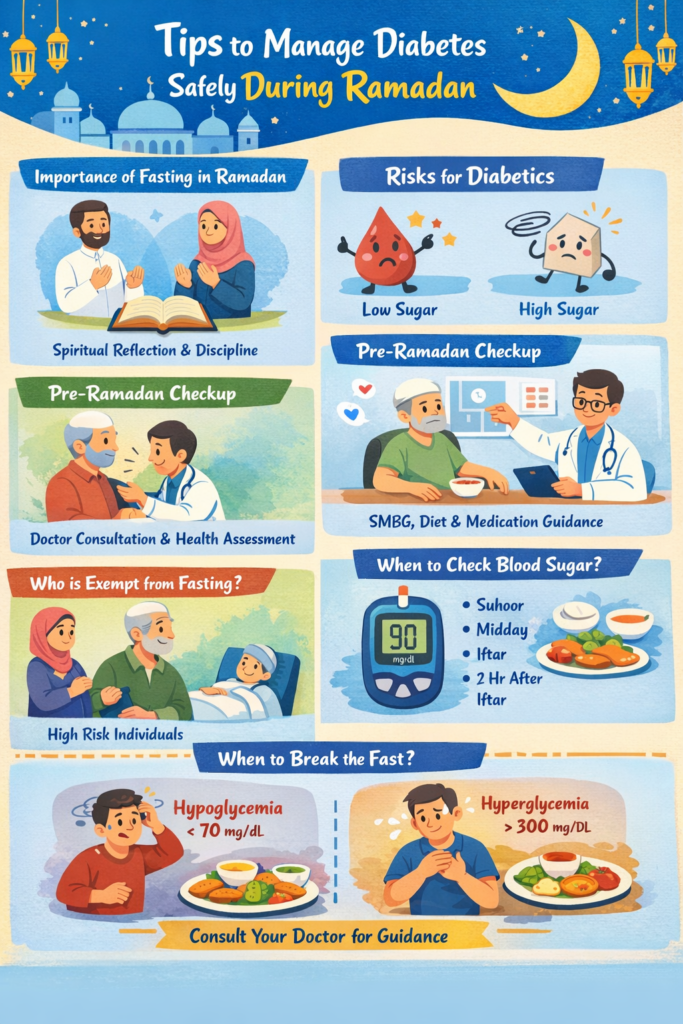
🧪 When Should Blood Sugar Be Checked During Ramadan?
Blood glucose monitoring does NOT break the fast. Ask your doctor about the need and pattern of doing self-monitoring. People on high risk for low sugar and on insulin needs more frequent checking.
Recommended times:
- Before Suhoor
- Morning
- Midday
- Mid-afternoon
- Before Iftar
- 2 hours after Iftar
- Anytime symptoms occur
💡 Continuous glucose monitoring (CGM e.g., FreeStyle Libre, Dexcom 7, Sibionics etc.) can be very helpful for high-risk patients like who are on Insulin or have type 1 diabetes .
⛔ When Should the Fast Be Broken Immediately?
Break the fast if:
- Blood glucose < 70 mg/dL (3.9 mmol/L)
- Blood glucose > 300 mg/dL (16.6 mmol/L)
- Symptoms of hypoglycemia, hyperglycemia, or acute illness occur
🍽️ Healthy Way to Break the Fast (Iftar)
- Start with water + 1–3 dates
- Light foods: fruits, soups, milk, nuts
- If juice is taken, limit to 100–150 ml (whole fruits are better)
- Main meal after 1 hour
- Hydration: 2–3 liters of water during non-fasting hours
🌅 Ideal Suhoor Meal for People with Diabetes
Suhoor should be:
- Taken as late as possible
- Rich in complex carbohydrates & proteins
Best choices:
- Whole grains, oats, brown rice, quinoa
- Millets, beans, vegetables
- Eggs, milk, fruits
These foods provide long-lasting energy and reduce hypoglycemia risk.
🥗 Smart Eating Tips During Ramadan
Prefer 2 smaller meals + 1 snack
- Eat slowly and mindfully
- Avoid sugary desserts
- Avoid overeating
- Reduce deep-fried, spicy foods
- Limit caffeine (coffee, tea, cola)
🚶 Exercise During Ramadan: What’s Safe?
- Light stretching: 3–4 hours after Suhoor
- Walking or light gym: 2 hours after Iftar
- Avoid exercise if blood sugar is low
- Modify intensity and timing
💊 Medication Adjustment During Ramadan
⚠️ Never adjust medications without consulting your doctor.
Medications needing dose/timing changes:
- Sulfonylureas (e.g., Glimepiride, Gliclazide)
- Insulin
Timing modification needed:
- SGLT-2 inhibitors (Dapagliflozin, Empagliflozin, etc.) → take 1–2 hours after Iftar with good hydration
Usually no dose change needed:
- Metformin
- DPP-4 inhibitors
- GLP-1 receptor agonists
📌 Oral Semaglutide: Preferably 30 minutes before Suhoor
🌙 Final Message
With proper planning, education, and medical guidance, many people with diabetes can fast safely during Ramadan. Your health is an amanah (trust). Always prioritize safety alongside spirituality.
✨ Wishing you and your family a Blessed, Healthy, and Successful Ramadan ✨